
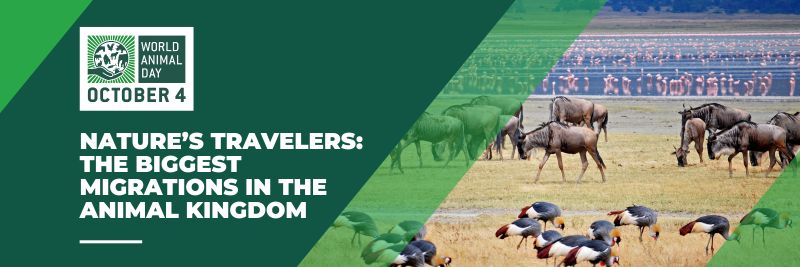
Nature’s Travellers: The Biggest Migrations in the Animal Kingdom
Animal migration is the seasonal movement of animal populations in search of food, breeding grounds, and suitable climates. These journeys can span continents and oceans, shaped by the need to survive and follow changing environmental conditions. Migration is vital for both animal survival and healthy ecosystems, helping to maintain food chains and reflect changes in climate and the natural world.
World Animal Day celebrates all species and highlights the importance of protecting wildlife. At its core is the understanding that migration must be conserved, yet these ancient routes are increasingly disrupted by habitat loss, climate change, pollution, and human-made barriers. As we explore some of nature’s greatest journeys, we must also recognise the growing threats they face and the urgent need to protect the pathways that make them possible.
Animals migrate to survive, moving in response to changes in food availability, climate and seasonal conditions. Many species travel long distances to reach areas where food is more abundant, whilst others move to find safe breeding and nesting grounds with fewer predators. Migration also helps animals avoid harsher weather and take advantage of more favourable climates through the seasons. Together, these journeys are essential for survival and are deeply connected to the natural cycles of the planet.
Across the Savannah: The Great Wildebeest Migration
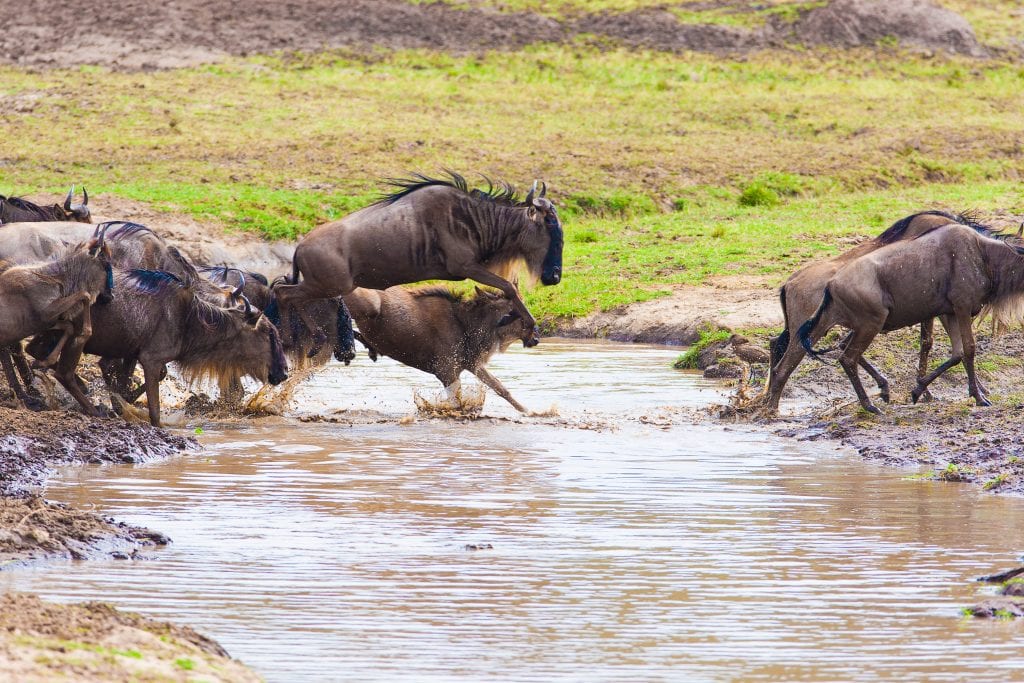
The Great Wildebeest Migration is one of the largest wildlife movements on Earth, involving around 1.5 million wildebeest alongside hundreds of thousands of zebras and gazelles. Taking place across the savanna biomes of Tanzania and Kenya, this continuous journey is driven by seasonal rainfall and growth of fresh grass. The herds are constantly on the move in search of food and water, following changing weather patterns rather than a fixed route. This migration plays a vital role in maintaining healthy grassland systems. It supports predators such as lions, cheetahs, leopards and hyenas and helps recycle nutrients across large landscapes. However, this migration is under increasing pressure due to climate change and expanding human development, all of which can disrupt traditional routes.
Through the Oceans: The Humpback Whale Migration

Humpback whales undertake one of the longest migrations of any mammal on Earth, travelling between cold feeding waters and warm breeding grounds each year. They feed in nutrient-rich polar waters, such as those near Antarctica and the North Pacific, where krill and small fish are abundant. They then migrate thousands of kilometres, often travelling thousands of kilometres, with some populations covering more than 8,000 km one way, to tropical waters near regions such as Hawaii and the Caribbean to breed and give birth.
Warm waters provide a safer environment for calves, while adults often fast during the breeding season, relying on stored energy. Mothers are highly protective of their young, and communication plays a vital role in their survival, with complex whale songs capable of travelling vast distances underwater.
Yet this remarkable journey is increasingly threatened by human activity. Ship strikes in busy ocean routes, noise pollution that interferes with communication, entanglement in fishing gear, and climate change affecting food supplies all place pressure on whale populations.
The humpback whale migration highlights the deep interconnectedness of marine ecosystems, and the need to protect ocean corridors that stretch across entire oceans.
Between the Poles: The Arctic Tern’s Epic Journey
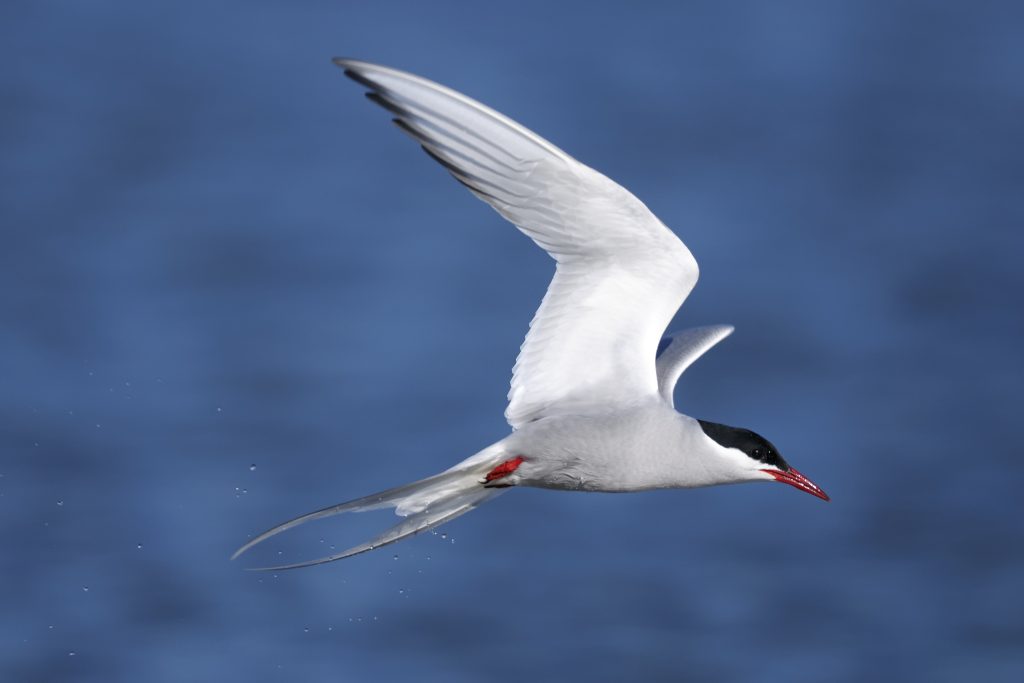
The Arctic tern is widely recognised as undertaking the longest migration of any animal on Earth. Each year, it travels between the Arctic and Antarctic, experiencing two summers annually and more daylight than any other species. Breeding in the Arctic during the northern summer, including regions such as Greenland, Arctic terns then migrate to Antarctic waters for the southern summer. This extraordinary round-trip journey can cover up to 70,000 kilometres or more each year.
These birds rely on continuous daylight and highly productive ocean waters to feed on small fish and marine invertebrates. They use wind patterns and ocean currents to assist their journey, making one of the most efficient long-distance migrations in the natural world.
However, Arctic terns face increasing threats from shifting ocean temperatures, changing food availability, plastic pollution, and disturbance of breeding colonies.
Their migration is a powerful reminder of how connected Earth’s polar regions are, and how even small birds depend on vast global ecosystems.
Ensuring These Journeys Continue
The migrations of wildebeest, humpback whales, and Arctic terns reveal a fundamental truth: wildlife depends on a connected, healthy planet where land, sea, and sky function as one system.
These journeys support entire ecosystems, from grasslands shaped by grazing herds to marine food webs and polar environments that regulate global biodiversity.
Today, however, migration routes are increasingly at risk:
- Habitats are shrinking due to agriculture, urban development, roads, and infrastructure
- Migration corridors are fragmented by fences, dams, and other barriers
- Oceans are disrupted by warming waters, shipping traffic, and underwater noise pollution
- Climate change is altering seasonal patterns, wind systems, and food availability
Protecting these journeys requires urgent action:
- Restore and reconnect habitats so animals can move freely
- Create protected wildlife corridors across regions and borders
- Reduce pollution in air, land, and oceans
- Support conservation programmes that monitor migratory species
- Take meaningful action on climate change
Every species has a role to play, and every migration has a purpose.
These extraordinary journeys are essential to maintaining balance across the planet’s ecosystems. They connect continents, oceans, and skies, linking life in ways that are both fragile and astonishingly powerful.
By acting now, we can help ensure that the world’s greatest animal migrations continue for generations to come, preserving the natural rhythms that sustain life on Earth.